Remember those jaw-dropping moments in games when the visuals just hit differently, pulling you so deep into the world you almost forget you’re playing?
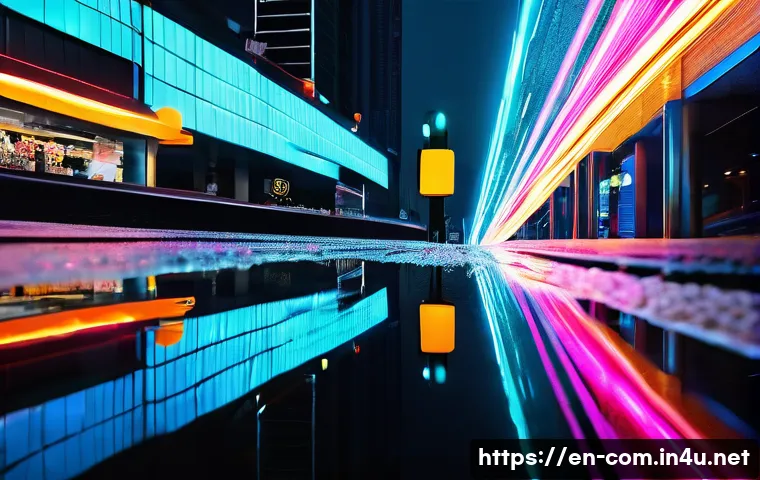
For me, the advent of ray tracing technology has brought those moments to a whole new level, fundamentally altering how we perceive and interact with digital landscapes.
It’s not just about brighter lights or shinier surfaces; from my own experience, it’s about the way light realistically bounces off every single object, creating truly dynamic shadows and reflections that make virtual environments feel incredibly authentic, almost tangible.
This isn’t just a fancy graphics setting for high-end PCs anymore; it’s rapidly becoming a cornerstone of modern gaming, pushing immersion to cinematic levels we only dreamed of a few years ago.
As more and more titles embrace this stunning visual fidelity, it’s clear we’re witnessing a pivotal shift in what’s graphically possible. Curious about how this tech truly elevates your gaming experience?
Let’s get into the specifics and explore its profound impact.
Bringing Game Worlds to Life: More Than Just a Visual Upgrade
I remember the first time I truly *saw* ray tracing in action, not just in a tech demo, but within a game I actually cared about. It wasn’t the flashy reflections that caught my eye initially, though those are undeniably stunning.
What really blew me away was the subtle, almost subconscious way light behaved. It felt… organic.
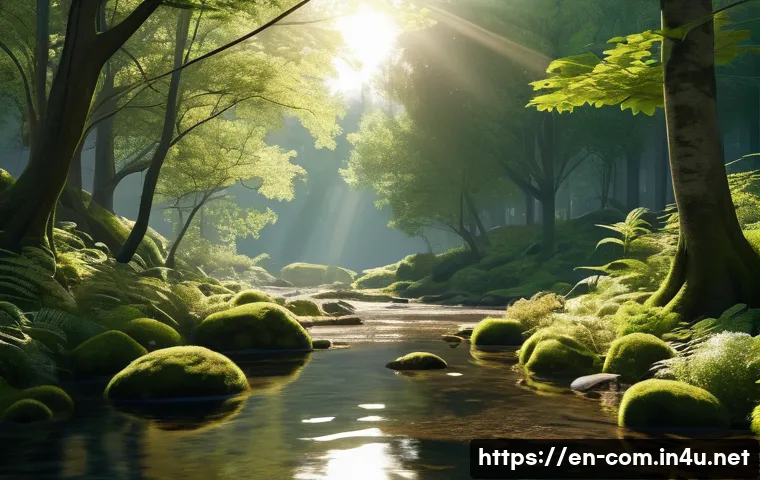
Like when you’re walking through a forest in real life and the sunlight filters through the leaves, casting dappled shadows that dance as the branches sway.
That’s the feeling ray tracing gives me. It’s not just about turning up the brightness; it’s about simulating the actual physics of light, how it bounces, scatters, and absorbs.
This means every object, every character, every tiny dust particle in the game world interacts with light in a way that just screams “real.” I’ve spent countless hours in games like Cyberpunk 2077 or Control, not just playing, but genuinely exploring, pausing to admire how light spills from a neon sign onto a wet street, or how a single lamp illuminates a sprawling, dark corridor, pushing the shadows into corners with an almost palpable presence.
It genuinely transforms how I perceive depth, atmosphere, and even the emotional tone of a scene. It truly is a fundamental shift in how we experience digital realism, pushing the boundaries of what’s graphically achievable and making virtual environments feel almost tangible.
The difference isn’t just noticeable; it’s transformative, offering an unparalleled level of immersion that standard rasterization simply can’t replicate.
The Subtle Art of Realistic Illumination
For me, the most profound impact of ray tracing often lies in the nuanced ways it handles indirect illumination. We’re talking about global illumination, where light doesn’t just hit a surface and stop, but bounces around, illuminating other nearby objects. This creates an incredibly natural light spread that developers used to painstakingly fake with baked-in light maps. Now, it’s dynamic. I’ve walked into virtual rooms in games where a single window bathes the entire space in soft, ambient light, subtly coloring the walls and furniture based on the time of day or even the weather outside. It’s this kind of detail that makes you stop and appreciate the craftsmanship, blurring the lines between what’s rendered and what your brain perceives as reality. It’s a game-changer for environmental storytelling, allowing artists to create mood and atmosphere with light in ways that were previously impossible, making every shadow and highlight feel deliberate and meaningful.
Atmospheric Depth and Volumetric Effects
Another aspect I’ve grown to love about ray tracing is how it enhances volumetric effects. Think about fog, smoke, or even god rays – those beautiful shafts of light breaking through clouds. With ray tracing, these aren’t just flat textures or screen-space tricks; they interact with light in a far more convincing manner. I’ve been in virtual environments where thick fog genuinely diffused light sources, or where dust motes caught the ray-traced sunlight, adding a layer of visual noise and texture that makes the air itself feel present. It adds a physical quality to the atmosphere, making environments feel more dense, more breathable, and incredibly immersive. It’s these touches that elevate a game from looking good to feeling truly alive, pulling me deeper into the narrative and the world itself.
Reflections That Fool Your Eyes: A New Mirror to Reality
If there’s one thing that immediately shouts “ray tracing” to anyone, it’s the reflections. And honestly, they’re often the first thing that catches my eye too!
I’ve lost count of the times I’ve stopped in a game, just to stare into a puddle or a polished surface, completely mesmerized by the fidelity of what’s being reflected.
It’s not just a blurry approximation of what’s off-screen; it’s a pixel-perfect, dynamic reflection of the entire environment, including things happening behind the camera.
This means if an explosion goes off behind you, you’ll see its fiery glow accurately reflected in a character’s visor or a wet pavement ahead. For me, this goes beyond mere aesthetics.
It adds an incredible layer of believability to the world. When I’m navigating a futuristic city at night, seeing the neon signs, bustling crowds, and distant skyscrapers accurately mirrored in every reflective surface – from building windows to car paint – it creates a sense of place that is unparalleled.
It truly grounds the experience, making the digital world feel cohesive and consistent, enhancing my overall immersion in a way that static or screen-space reflections just can’t touch.
The Authenticity of Water and Glass
I find that water and glass surfaces are where ray-traced reflections truly shine, literally. Running through a rain-slicked street in a game with ray tracing on is a revelation. Every single drop of rain, every splash, every distant light source is perfectly replicated on the wet ground, creating a shimmering, dynamic tapestry of reflections. And glass! Walking past skyscrapers with glass facades, seeing the world outside and even my own character reflected within them, it’s astonishing. It’s not just about a flat, shiny texture; it’s about depth and transparency interacting with reflections in a physically accurate way. This level of detail isn’t just for show; it subtly but profoundly enhances the sense of realism, making these common in-game elements feel genuinely part of the world, rather than just a visual prop.
Reflecting Character and Story
What I’ve come to appreciate deeply is how these realistic reflections can subtly enhance character and narrative. Imagine a character standing before a polished mirror or a large window. With ray tracing, you don’t just see a generic reflection; you see *their* reflection, complete with their current emotional state, the details of their clothing, and the environment around them. This can add a powerful, understated layer to storytelling, allowing for visual cues that deepen the player’s connection to the character or the ongoing plot. I’ve personally found myself catching glances of character reflections in unexpected places, offering fleeting insights into their world or even their inner state. It’s a small detail, but one that adds so much to the narrative texture of a game, enriching the overall experience in a very subtle yet impactful way.
Shadows That Tell a Story: Dynamic Depth and Atmosphere
Before ray tracing, shadows in games were often a bit… static. They were either pre-baked into the environment or generated with simpler algorithms that could sometimes look blocky or just plain wrong.
But with ray tracing, shadows have been completely revolutionized. Now, they’re dynamic, soft, and incredibly realistic, mimicking how shadows truly behave in the real world.
I’ve been absolutely captivated by how shadows now accurately soften with distance from the object, how they respond to every light source, and how they subtly shift as objects move.
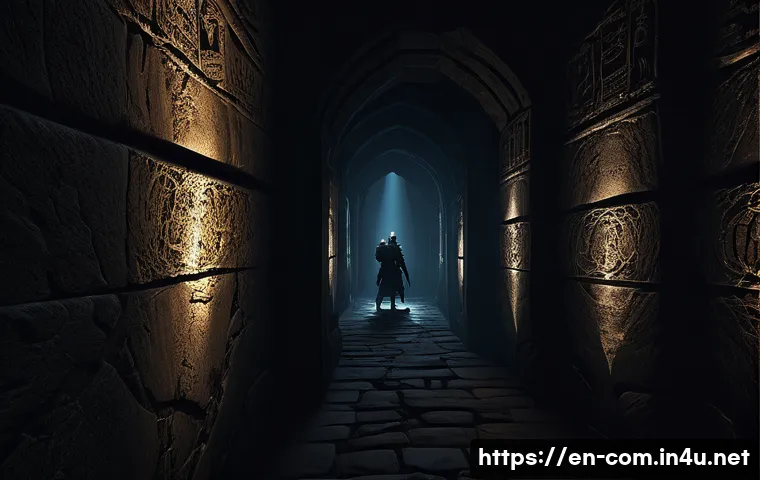
This isn’t just about making things look prettier; it’s about adding a layer of depth and realism that profoundly impacts environmental perception. When I’m exploring a dimly lit cave, the way my character’s flashlight beam casts long, moving shadows of stalactites, or how the subtle flicker of a torch creates dancing shadows on a dungeon wall, it completely changes the atmosphere.
It makes the world feel more grounded, more physical, and far more believable, pulling me deeper into the game’s narrative and mood.
The Nuances of Penumbra and Umbra
One of the more technical aspects of ray-traced shadows that has truly captivated me is the accurate rendering of penumbra and umbra. In simpler terms, this means shadows aren’t just hard-edged blocks; they have softer, graduated edges (penumbra) where light is partially obstructed, and sharper, darker cores (umbra) where light is completely blocked. I’ve spent time just watching how shadows cast by distant trees or intricate foliage subtly diffuse at their edges, while the shadows directly beneath a character remain crisp and defined. This level of physical accuracy makes shadows feel genuinely part of the environment rather than just a graphical overlay. It’s a detail that, once you notice it, you can’t un-see, and it contributes immensely to the overall visual realism and my sense of immersion.
Interactive Shadows and Gameplay Impact
Beyond aesthetics, ray-traced shadows can subtly influence gameplay. Imagine a stealth game where dynamic shadows accurately reflect your position, making it clearer when you’re truly hidden from enemy sight. Or consider a puzzle game where the play of light and shadow is crucial to solving environmental challenges. I’ve experienced moments where the enhanced realism of shadows made me instinctively check every dark corner for hidden foes, or where the absence of a shadow betrayed a cleverly disguised enemy. This interactive quality of shadows adds a tactical layer that was less pronounced with older rendering techniques, making the game world not just look better, but also behave in a more believable and engaging way. It’s a testament to how graphics can intertwine with gameplay to create a richer, more satisfying experience.
Performance vs. Beauty: Striking the Right Balance with Ray Tracing
Let’s be real, while ray tracing looks absolutely incredible, it’s also a significant performance hog. When it first came out, enabling it often meant sacrificing a hefty chunk of your frame rate, sometimes making games almost unplayable on anything but the absolute top-tier hardware.
I remember upgrading my GPU specifically to experience ray tracing without turning my favorite games into slideshows. It was an investment, but for me, it was worth it.
However, the good news is that the technology has been steadily optimizing. Graphics card manufacturers are constantly refining their hardware, and game developers are getting smarter about how they implement ray tracing effects, offering various levels of fidelity.
This means that now, more people than ever can experience at least some form of ray tracing without completely breaking the bank or needing a supercomputer.
It’s a constant dance between pushing visual boundaries and maintaining smooth gameplay, and finding that sweet spot is key to enjoying the ray-traced revolution.
Optimizing Your Ray Tracing Experience
From my own experimentation, finding the right settings is crucial. Most games offer different levels of ray tracing – perhaps just reflections, or shadows, or global illumination, or a combination. I usually start by enabling the effects I care about most, like global illumination for overall atmosphere or reflections for that ‘wow’ factor, and then scale back other settings if my frame rate drops too low. Technologies like DLSS (NVIDIA) or FSR (AMD) are absolute lifesavers here. I’ve personally seen them turn a choppy 30 FPS experience with ray tracing into a buttery smooth 60+ FPS, all while maintaining incredible visual quality. It’s like magic, seriously. They allow you to render the game at a lower resolution and then intelligently upscale it, recovering performance without a noticeable drop in detail. Getting the most out of ray tracing often means diving into those graphics menus and tweaking until you hit that perfect balance of visual fidelity and fluid gameplay.
The Hardware Evolution and Accessibility
When ray tracing first landed, it felt like a feature exclusively for those with the deepest pockets. I mean, the initial cards capable of handling it were premium products. However, the market has rapidly evolved. Each new generation of GPUs brings more powerful ray tracing cores and improved architectural efficiencies. What was once a high-end luxury is steadily trickling down to more mainstream graphics cards. This increasing accessibility is exciting because it means more gamers can experience these incredible visuals. I’m seeing more mid-range cards now offering a respectable ray tracing experience, especially when paired with upscaling technologies. It’s a clear indication that this isn’t just a passing fad; it’s a foundational shift in game graphics, and the hardware is catching up to make it a standard feature for everyone. It’s a thrilling time to be a gamer, watching this technology mature and become more broadly available.
| Ray Tracing Feature | Impact on Game World | Performance Consideration | My Personal Take |
|---|---|---|---|
| Global Illumination (GI) | Realistically bounces light, creating soft, natural ambient lighting and shadows. Deepens atmosphere. | High impact, often the most demanding RT feature. Significant FPS drop if not optimized. | Absolutely essential for immersion. If I can only enable one RT feature, this is it. Transforms the mood. |
| Reflections | Physically accurate reflections on shiny surfaces (water, glass, metal). Adds stunning realism. | Moderate to High impact, depending on complexity and number of reflective surfaces. | Visually striking and often the ‘wow’ factor. Great for showing off graphics, but can be scaled back if needed. |
| Shadows | Soft, dynamic, and physically accurate shadows with proper penumbra and umbra. Enhances depth. | Moderate impact, less demanding than GI but more than traditional shadows. | Crucial for grounding objects in the environment. Makes everything feel more tangible. Worth the performance hit. |
| Ambient Occlusion (AO) | Calculates subtle contact shadows where objects meet or are close, adding perceived depth. | Lower impact than other RT features, often a good entry point for enabling RT. | Small but mighty. Fills in those little details that make objects pop. A definite ‘on’ for me. |
The Future is Bright and Reflective: What’s Next for Ray Tracing
Looking ahead, it’s clear that ray tracing isn’t just a fancy add-on; it’s becoming an integral part of how games are developed and experienced. We’re already seeing engines like Unreal Engine 5 leveraging its power to create incredibly detailed and realistic environments with unparalleled ease for developers.
This means we’re only scratching the surface of what’s possible. I envision a future where ray tracing isn’t just about reflections and shadows, but about fully path-traced games where every single pixel’s light interaction is simulated, leading to graphics that are virtually indistinguishable from reality.
Of course, that’s still a ways off in terms of computational power, but the trajectory is undeniable. It’s a thrilling prospect, knowing that the games we’ll be playing in a few years will push visual fidelity to levels we can barely imagine today, creating experiences that are even more immersive and emotionally resonant.
Beyond Graphics: Ray Tracing for Audio and Physics
What really excites me about the future of ray tracing isn’t just the visual aspect. Imagine ray tracing being used for audio, simulating how sound waves bounce around an environment, creating truly spatial and realistic acoustics. I’ve heard early tech demos of this, and it’s mind-blowing – hearing echoes and reverberations that perfectly match the virtual space. Or think about physics: imagine accurately simulated light pressure or heat transfer using ray tracing principles. It opens up a whole new dimension of interactivity and realism that goes far beyond what we simply see on screen. This holistic approach, where ray tracing isn’t just a rendering technique but a foundational simulation tool, is incredibly promising and will undoubtedly lead to game experiences that feel more alive and responsive than ever before. It’s a frontier I’m personally eager to explore as a gamer.
The Evolving Eco
The continuous improvement in ray tracing technology isn’t just about faster GPUs, though those are definitely welcome! It’s also about smarter software implementations, more efficient algorithms, and the establishment of industry-wide standards. I’ve been following the developments closely, and it’s fascinating to see how developers and hardware manufacturers are collaborating to make ray tracing more accessible and less demanding. This concerted effort means that future games will likely integrate ray tracing in a much more optimized and seamless way, perhaps even making it the default rendering method for certain effects. This evolving ecosystem, driven by innovation across the board, ensures that ray tracing will continue to mature, becoming an even more impactful and ubiquitous technology in the gaming landscape. I’m excited to see how this pushes the creative boundaries for game developers and, by extension, the immersive experiences we get to enjoy.
글을마치며
As we wrap things up, I hope you’ve gotten a real sense of just how revolutionary ray tracing truly is. For me, it’s not just about flashy graphics; it’s about a fundamental shift in how we perceive and interact with virtual worlds. It’s what makes those digital landscapes feel alive, the reflections believable, and the shadows tell their own subtle stories. Experiencing it firsthand has truly reignited my passion for exploring game worlds, pushing me to pause and appreciate the incredible artistry and technical wizardry behind every scene. It’s a journey I’m incredibly excited to continue, and I honestly can’t wait to see how developers push these boundaries even further in the years to come, making our gaming experiences richer and more immersive than ever before.
알아두면 쓸모 있는 정보
Here are a few nuggets of wisdom I’ve picked up on my ray tracing journey that might help you get the most out out of this incredible technology:
1. Don’t be afraid to experiment with your in-game settings. Most games offer different levels of ray tracing, so try enabling specific features like reflections or global illumination one by one to see what works best for your system and what you value most visually.
2. Seriously, leverage upscaling technologies like NVIDIA’s DLSS or AMD’s FSR. They are absolute game-changers for performance. I’ve seen them magically transform a choppy experience into something silky smooth without a significant hit to visual quality, allowing me to enjoy ray tracing on hardware that might otherwise struggle.
3. Keep your GPU drivers updated! This might sound obvious, but newer drivers often include performance optimizations specifically for ray tracing in popular titles. A quick update can sometimes make a noticeable difference in frame rates and stability, ensuring you’re getting the best possible experience.
4. Pay attention to how different ray tracing effects impact your performance. Global illumination is often the most demanding, while reflections can also be quite heavy. If you’re struggling, try scaling back these more intensive options first before turning ray tracing off completely.
5. Consider the “future-proofing” aspect. While high-end hardware is currently best for a full-on ray tracing experience, the technology is becoming more optimized and accessible with each new generation of GPUs. If you’re planning an upgrade, it’s definitely a feature worth prioritizing for longevity and immersion.
중요 사항 정리
To sum it all up, ray tracing is a transformative technology that fundamentally redefines visual fidelity in games. It brings an unparalleled level of realism to reflections, shadows, and global illumination, making game worlds feel incredibly authentic and immersive. While it demands significant hardware resources, ongoing optimizations and upscaling technologies are making it more accessible to a wider audience. It’s not just a graphical upgrade; it’s a pivotal step towards creating more believable, atmospheric, and emotionally resonant virtual experiences, and it’s clear this technology will be central to the future of gaming.
Frequently Asked Questions (FAQ) 📖
Q: What exactly is ray tracing, and how does it truly transform the visuals in my favorite games?
A: Oh, this is a fantastic question, and one I get asked a lot! From my own perspective, ray tracing isn’t just another graphics setting; it’s a fundamental reimagining of how light behaves in virtual worlds.
Think of it this way: traditional game rendering often fakes lighting and shadows with clever tricks and pre-baked effects. It’s like a Hollywood set where everything is meticulously lit for the camera.
Ray tracing, on the other hand, simulates light exactly as it would in the real world. It literally traces the path of individual light rays, bouncing them off surfaces, calculating reflections, refractions, and how shadows would naturally fall.
What this means for your gaming experience is a dramatic leap in realism. I remember playing a certain cyberpunk game and just stopping to stare at a rainy street.
The reflections of neon signs shimmering in puddles, cars gleaming, and the intricate shadows cast by every single streetlamp were absolutely breathtaking.
It wasn’t just a shiny texture; it was a dynamic, living environment. You see reflections in windows that accurately mirror the world behind you, shadows that soften and spread realistically, and light that spills naturally through a dusty window.
It truly brings an unbelievable sense of depth and authenticity, making the virtual world feel much more tangible and immersive than ever before. It’s less about “prettier graphics” and more about “believable reality.”
Q: I’m interested in trying ray tracing, but it sounds like it requires a super high-end, expensive PC. Can I still experience it on my current setup, or do I need to upgrade everything?
A: That’s a common concern, and I totally get it! For a long time, ray tracing did feel exclusive to those with top-tier, bleeding-edge hardware. And yes, to run games at max settings with full ray tracing at high frame rates, you’ll still want a pretty beefy GPU from the latest generations.
However, the good news is that the technology is becoming far more accessible than it used to be. Many modern graphics cards, even mid-range ones from the last couple of generations (think NVIDIA’s RTX 20-series and newer, or AMD’s RX 6000 series and up), offer some form of ray tracing acceleration.
What I’ve found personally is that you don’t always need to max out every single ray tracing setting to get a noticeable improvement. Often, just turning on ray-traced reflections or shadows, even at a medium setting, can make a huge difference to the visual fidelity without completely tanking your frame rate.
Developers are also getting much better at optimizing their games, and technologies like DLSS (NVIDIA) or FSR (AMD) use AI upscaling to give you better performance with ray tracing enabled.
So, before you rush out and spend a fortune, check your current GPU’s capabilities and experiment with the in-game settings. You might be surprised by how much of that visual magic you can unlock without a total system overhaul!
It’s all about finding that sweet spot between stunning visuals and smooth gameplay for your specific rig.
Q: Is ray tracing just a visual gimmick, or does it genuinely enhance the actual gameplay experience beyond just looking pretty?
A: This is where it gets really interesting, and honestly, a question that I often pondered myself when ray tracing first emerged. At its core, yes, ray tracing is about visual fidelity, and making things look incredibly realistic.
But to call it just a “gimmick” would be a huge disservice, especially once you’ve truly experienced its impact. From my perspective, it absolutely elevates the gameplay experience, primarily through unparalleled immersion.
Think about it: when environments feel more real, your brain buys into the illusion more completely. That terrifying monster suddenly feels more menacing when its shadow realistically creeps along the walls towards you.
Exploring a dimly lit cave becomes more atmospheric and tense when light bounces authentically off every uneven surface, highlighting hidden details. I remember playing a detective game where accurately rendered reflections in a window gave me a crucial clue about someone hiding behind me – a detail that would have been impossible or far less convincing with traditional rendering.
It adds a layer of believability that deepens your connection to the game world. It pulls you in, makes you feel more present, and that, to me, is a fundamental enhancement to gameplay.
It’s not just about shiny surfaces; it’s about a more consistent, believable, and ultimately more engrossing world to play in.